

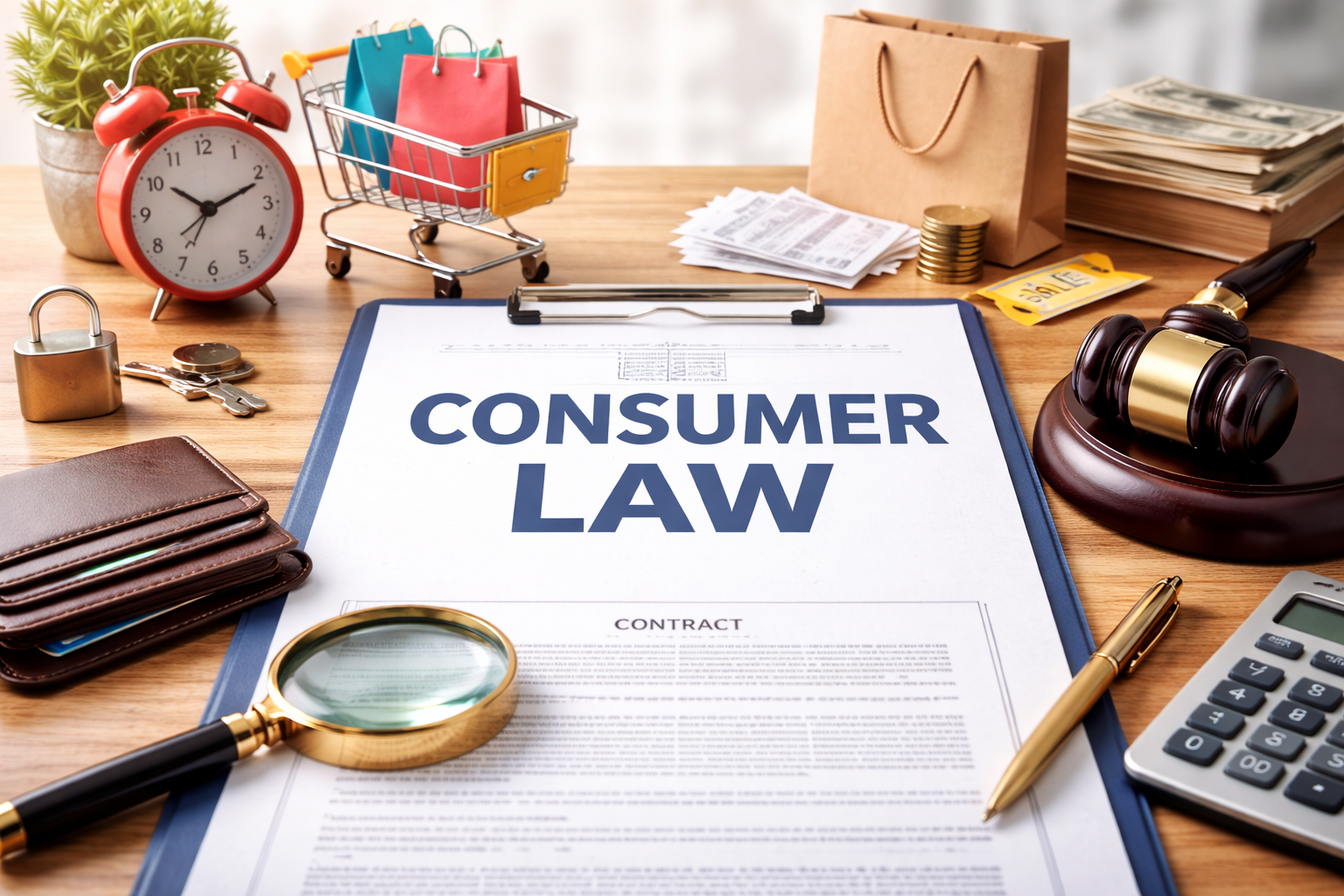
Consumer law in India is designed to protect the rights and interests of consumers against unfair trade practices, defective goods, and deficient services. In today’s fast-paced market, where consumers regularly purchase products and services both online and offline, understanding consumer law is essential to safeguard oneself from fraud, exploitation, and negligence.
What is Consumer Law?
Consumer law refers to a set of legal provisions that aim to protect consumers from unfair practices by sellers, manufacturers, and service providers. In India, consumer protection is governed by the Consumer Protection Act, 2019, which replaced the earlier 1986 Act to address modern challenges like e-commerce and digital transactions.
Who is a Consumer?
A consumer is any person who:
- Buys goods for personal use
- Avails services for consideration
- Does not purchase goods for resale or commercial purposes
Consumers form the backbone of the economy, and their protection is crucial for maintaining fair trade practices.
Rights of Consumers in India
The Consumer Protection Act provides several fundamental rights:
1. Right to Safety
Protection against hazardous goods and services.
2. Right to Information
Consumers have the right to know about product quality, quantity, price, and ingredients.
3. Right to Choose
Freedom to select from a variety of goods and services.
4. Right to be Heard
Consumers can voice complaints and grievances.
5. Right to Seek Redressal
Right to compensation for unfair practices or damages.
6. Right to Consumer Education
Awareness about rights and remedies.
Types of Consumer Disputes
Consumer disputes may arise in various situations:
- Defective products
- Poor service quality
- Overcharging or hidden charges
- False or misleading advertisements
- Delay in delivery
- E-commerce fraud
These disputes can be resolved through legal mechanisms provided under consumer law.
Consumer Dispute Redressal Commissions
The Act establishes a three-tier system for resolving disputes:
1. District Commission
Handles cases with lower claim value.
2. State Commission
Handles appeals and higher-value cases.
3. National Commission
The apex body for consumer disputes in India.
These commissions provide a simple, speedy, and cost-effective dispute resolution process.
E-Commerce and Consumer Protection
With the rise of online shopping, consumer law has evolved to include e-commerce regulations:
- Mandatory disclosure of product details
- Transparent pricing
- Easy return and refund policies
- Protection against fake reviews
Online platforms are now accountable for ensuring fair practices.
Filing a Consumer Complaint
Consumers can file complaints easily by following these steps:
- Send a legal notice to the seller/service provider
- File a complaint with the appropriate commission
- Submit supporting documents (bills, receipts, proof)
- Attend hearings
- Await judgment
Complaints can also be filed online through government portals.
Reliefs Available to Consumers
Consumers can seek various remedies:
- Replacement of defective goods
- Refund of money
- Compensation for damages
- Removal of defects
- Discontinuation of unfair practices
The aim is to restore the consumer to their original position.
Role of Central Consumer Protection Authority (CCPA)
The Central Consumer Protection Authority (CCPA) was established under the 2019 Act to regulate consumer rights and prevent unfair trade practices.
Functions include:
- Investigating violations
- Ordering recalls of unsafe products
- Imposing penalties on misleading advertisements
- Protecting consumer interests
Product Liability
The 2019 Act introduced product liability, making manufacturers, sellers, and service providers accountable for defective products or services.
This ensures:
- Greater responsibility on businesses
- Better quality products
- Increased consumer trust
Misleading Advertisements
False advertisements are a major concern. The law penalizes companies and endorsers for misleading claims.
Consumers can take action if:
- Advertisements provide false information
- Claims are exaggerated or deceptive
Importance of Consumer Awareness
Awareness is the key to consumer protection. An informed consumer can:
- Make better purchasing decisions
- Avoid fraud and scams
- Take legal action when needed
Government and organizations regularly conduct awareness campaigns.
Challenges in Consumer Protection
Despite strong laws, challenges remain:
- Lack of awareness
- Delay in dispute resolution
- Increasing online frauds
- Complex procedures for some cases
Efforts are being made to simplify processes and strengthen enforcement.
Tips for Consumers
To protect yourself as a consumer:
- Always check product details and reviews
- Keep bills and receipts
- Avoid deals that seem too good to be true
- Verify seller authenticity
- Report issues promptly
Being cautious can prevent many disputes.
Importance of Consumer Law in India
Consumer law plays a vital role in maintaining market discipline and fairness. It ensures that businesses follow ethical practices and consumers are not exploited.
It also builds trust in the marketplace, encouraging economic growth and healthy competition.
Conclusion
Consumer law in India provides strong protection against unfair trade practices and ensures justice for consumers. With the implementation of the Consumer Protection Act, 2019, the legal framework has become more robust and responsive to modern challenges.
Understanding your rights as a consumer empowers you to make informed decisions and take action when necessary. In a rapidly evolving marketplace, consumer awareness and legal protection go hand in hand to create a fair and transparent system.

Comments are closed